What is the material and tools for installing the AAC Panel in Australia?

Tools

The tools for installing AAC panels in Australia are divided into two categories: electric and manual. In this section, we will try to mention all these tools from the first step to the end.

  The first step to install the panels is the preparation of the sub-work of the panels. To install the damp course and Serking, we need a hand stapler, a special needle, and a cutter to cut the Serking, which is placed in the manual tool section.

  After completing this step, we need two types of tools to install Top Hats on the wall, one for installation, which is usually a rechargeable drill with a special pin for 40 or 10 mm screws for wooden or iron frames, and the other is an electric tool for cutting Top Hats with different brands. It is better that both of these tools are rechargeable due to the large use of these two tools in different places of the site.

In the next step, we will install the panels. For the installation, we need a cordless drill and a special pin for the screws. For the 50 and 75 mm panels, the screws are used with a length of 75 and 100 mm, respectively. A hand wheel can be used to move the panels to different places on the site. He also used an E-shaped lifter to lift and place it on the floor concrete. In some cases, BAR WRECKING is used for partial breaking. To cut the panels, you can use two cutting devices that can be adjusted in thickness, rechargeable or normal, with a special blade for panels. Also, to glue the ACC panels to each other, a special type of water-based powder glue is needed, and for its preparation, a rechargeable or ordinary mixer is needed. Also, trowel, Hawk, Scoop are needed for placing special glue between panels. A hammer and sandpaper for the panel may be needed during installation.

First step: material-Section 2

Types of Hebel installation materials-section2

Choosing the type and size of the ACC panel
Now we enter the installation material section and start from the most important part, choosing the type and size of the ACC panel.
Although it can be useful to express the methods of this section, work experience is an inseparable part. In order to understand this part better, some points should be considered about the height of the walls on the outside of the building. The simplest height of the external walls of one-story houses is as we move forward, the tips about the external walls become more complicated based on the types of houses, of course, all the information is available in the exterior maps of the building.

Map outside the building1
Map outside the building

The plan of the exterior of the building was discussed. When the buildings are designed, the plans of all parts of the building are also produced. These plans have an internal and external part in the building. We pay attention to the external plans. These plans are produced from different angles, such as: front plan, back plan, second plan. the side. All necessary and sufficient information is available in these plans. In fact, there are several methods for choosing the size of the panels. The first method is reading the exterior plans of the building, which has a very detailed discussion and we will try to examine it in the future. The second is work experience, which as we said before is a separate component. It is impossible, we will try to provide some tips and the last thing is to get all the information from the manufacturer.
Some of the one- and two-story houses that we are talking about, the roof usually starts in the outer part of the building along the top end of the external walls. To choose the size of the panel, it should be considered that the end of the panel should be slightly higher than the starting point of the roof surface. In fact, the roof should cover the outer wall. Some other houses have a large number of doors and windows around the building, some windows are located in the middle and some are located at the top. In order to choose the size of the panel, special attention should be paid to this matter, which can minimize work waste.

Thicness
Thicness

Choice of panel thickness
ACC panels are most widely used in three different thicknesses, which are 50, 75 and 100 mm respectively, although the type of thickness depends on the type of building designer. To be able to determine the thickness of the panel, there are different methods. The first method is referring to the exterior plans of the building, which illuminates the street like light. The second case is to talk to the manufacturer, which, of course, determines the appropriate thickness with the first method. The third is based on work experience. In this method, the amount of space on which the outer wall is placed (concrete floor) should be measured. This amount should be reduced by the thickness of the top hat that is behind the panel. The obtained number indicates the appropriate thickness of the ACC panel

Adhesiveand screws
For several years, walls called ACC panels have been designed and produced with newer technology with an approach of stylization, resistance and speed in installation. Just as the traditional wall is made of cement and sand for greater strength between the blocks, in this technology, a type of powder glue called ACC panel glue is used for greater strength between the panels, which is marketed under different brands. to be Of course, to keep the panels fixed on the building skeleton, special screws of different lengths are used, for a 50 mm thick panel, a 75 mm screw is used, and for a 100 mm screw, a 75 mm screw is used. . As can be seen from the calculations, the length of the screws is the total thickness of the ECC panel and the Top Hats.

First step: material

Types of Hebel installation materials

Today, with the advancement of technology, construction methods have changed from traditional to modern, from floor to wall and ceiling, everything is used with newer and safer types for the construction process. With the formation of these newly emerging materials, newer standards have been created to meet the minimum conditions.
The walls have also received a share from this technology, and today we are facing a newer type of it, which is called ACC panel, we have already talked about how to make these panels, and now we want to discuss the types of materials for installing these panels. We divide it into two parts: infrastructure material and final installation.

What is super course or dump course?
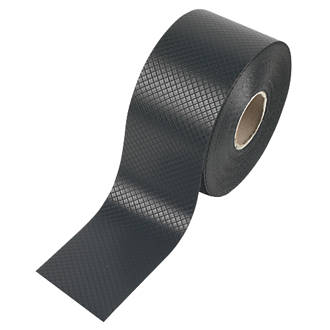
The first item in the infrastructure material is Supercourse, which is plastic of different thickness, width and length to prevent moisture from the part under the panel that is placed on the concrete to the panel itself. The most suitable thickness is 50 mm and the length of this super course is 50 meters depending on the packaging. The most important dimension is the width, which is available in different sizes.
The super course must cover the bottom of the panel and its back. To choose the appropriate width for the panels to be installed, which are two models with a thickness of 75 and 50 mm, it must be done according to the following formula.
Panel thickness (mm) + the amount of cover behind the panel (mm) + the amount of protrusion in front of the panel (mm) = super course width
Of course, small points should be considered, usually the location of the building skeleton and the panel on the concrete is associated with a surface difference, which should be considered in the amount of the cover behind the panel.


Course dump width? Some contractors and builders consider this amount based on the thickness of the panel and generally use a width of 150 mm, but the most suitable width based on field experience is 300 and 380 mm. Usually, the difference in level between the location of the skeleton and the ECC panel of the wall is 20 mm, and the height of the substructure of the panel, which we mentioned above, is considered to be 200 mm. Paying attention to the amount of protrusion from the front of the panel which is adjusted at the end of the texture section, which is usually 20 mm after adjustment, and considering the thickness of the panel, for example, 75 mm, it can reach a total width of 300 mm. He used 380 mm Supercourse.

What is the reason for using serking?
The second material in the infrastructure sector is the use of surging, which is known as vapor or covering of external walls and creates an additional layer of insulation and protection against the elements, which is usually supplied with a width of 1.35 meters and a length of 30 meters.

Top Hats
The third material in the infrastructure section is Top Hats, which is usually 6.10 meters long and the height of the U-shaped protrusion is 24 mm, and it is offered in two models, the mounted and the simple, the height of the perforated model may be slightly different, but in general, both models serve as support. ACC panel is used, which is made of Cyclonic.

screws
The last material in the under-construction section is all kinds of screws to keep the top hats fixed to the frame, and in Australia, wood or metal frames are used in the construction of one- and two-story houses, so a special type must be used for each. In the wooden frame, 40 mm screws are used.

Rating: 1 out of 5.